
It’s important to know what the difference is between growth vs value investing.
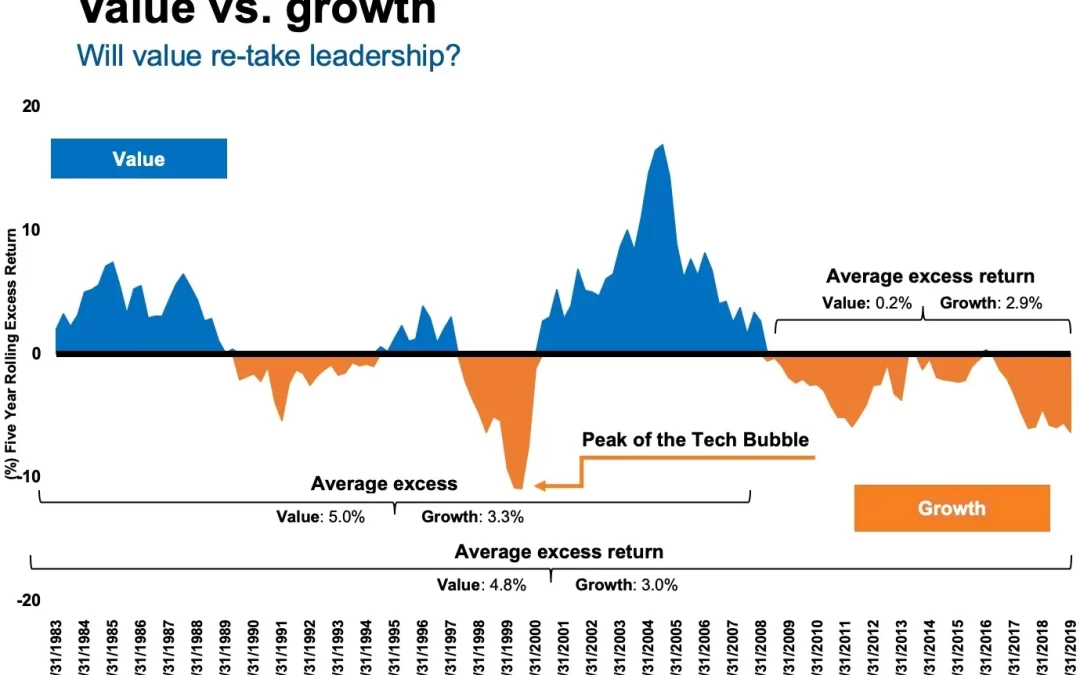
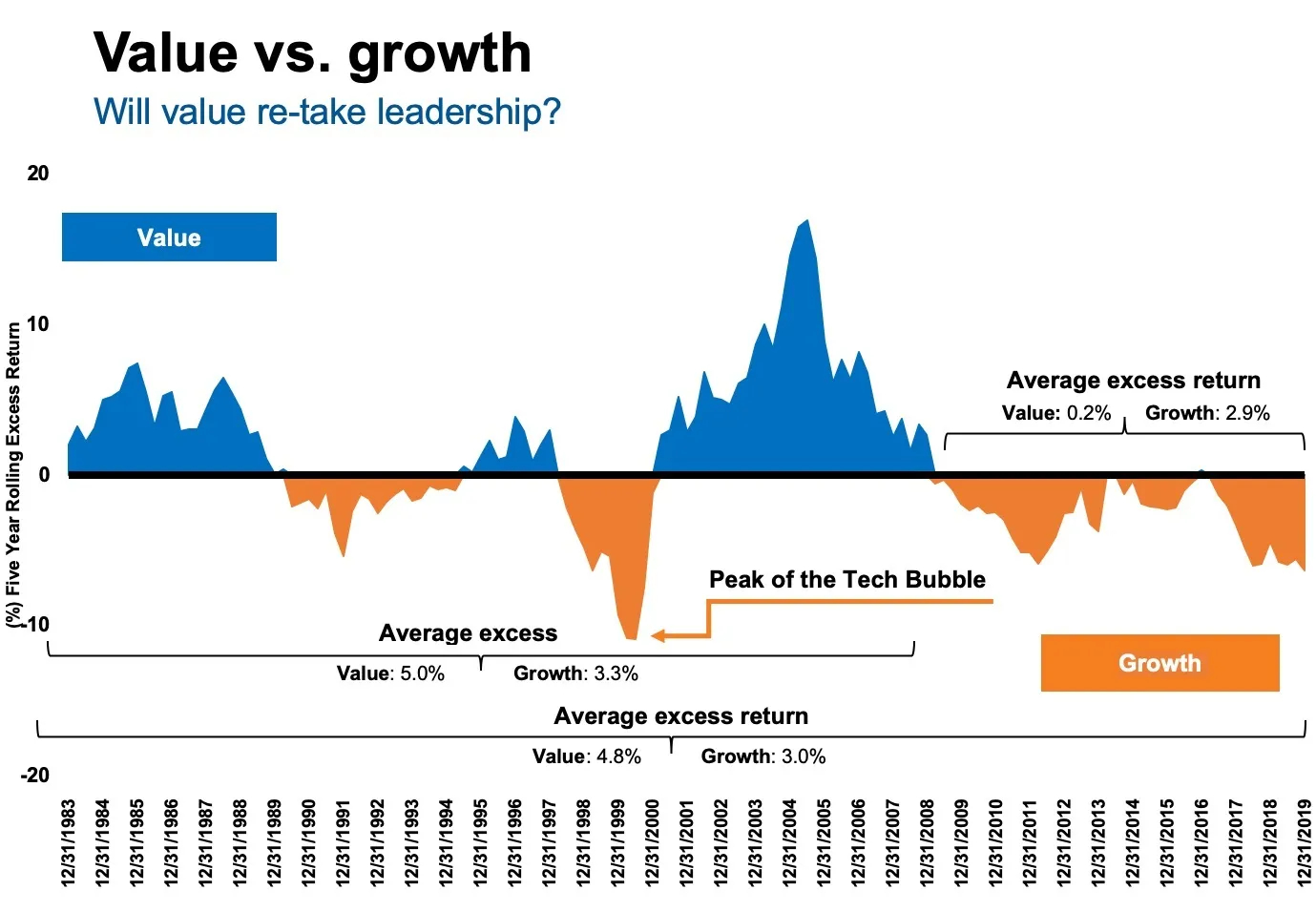
At different periods of time, the stock market appears to favour one or two stock types. Since the 2008 downturn for example, the market has primarily favored growth stocks. But some speculate that value stocks could make a big comeback due in part to big changes caused by the pandemic. This speculations however, does not guarantee performance.
What the difference is between growth stocks vs value stocks.
So what is value investing?
First up, let me explain the difference between growth vs value investing. The idea behind value investing is that investors are essentially bargain hunting. They are looking for stocks that they believe are undervalued by the market. They consider this an opportunity to buy. And, if they think it is overpriced, it’s an opportunity to sell.
To determine a value investment, value investors examine the company’s balance sheet, financial statements and cashflow statements to get clear picture of their assets, liabilities, revenues and expenses.
What are the risks of value investing?
There’s no guarantee that a stock will appreciate in value as much as an investor expects it to. A stock may remain undervalued, or even drop even further.
What is growth investing?
Essentially growth investing is using today’s information to identify tomorrow’s strongest stocks. The idea is to look for ‘winner’ companies within industries that are exopected to experience substanial growth.
Growth investors seek companies in a position to generate revenues or earnings greater than what the market expects.
When growth investors find a promising stock, they buy it, even if it has already experienced rapid price appreciation, in the hope that it will continue to rise as the company grows and attracts more investors.
Where as, value investors may use analysis, growth investors use criteria. Growth investors are more concerned about whether a company is exhibiting behaviour that suggests it will be one of tomorrow’s leaders; they are less focused on the value of the underlying company.
For example, growth investors may favor companies with a sustainable competitive advantage that are expected to experience rapid revenue growth, that are effective at containing costs and have experienced management team in place.
Risks of Growth vs Value Investing
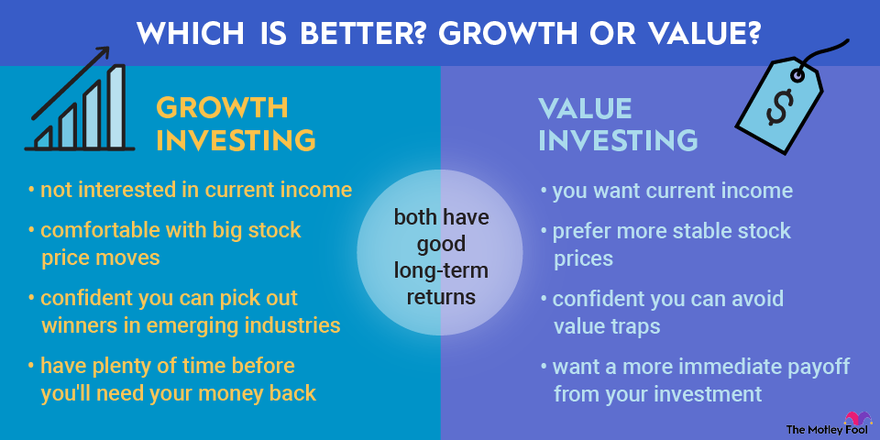
Growth investment may have an above average price to earnings ratio (PE ratio), but they may in some cases be prone to higher volitility than value investments.
These investments are typically bought at an already high price, and there’s always a risk that the price will fall or cease to rise any further.
Key differences of growth vs value investing.
Value investing and growth investing follow the same general purpose – to buy low and sell high. While they often overlap in criteria, the key difference between these two guiding principles is this: value investing have generally already proven their worth, while growth investing show potential for future worth.
Both investment types are banking on the assumption that the value will rise, but for different reasons.
So, for your own portfolio and long term wealth strategy you may find that a mix may provide a healthy and diverse assortment.
Work with us or your financial advisor before making any decisions regarding your portfolio. And if you do not have an advisor, click the link here for a free consultation.
Hope this was helpful 🙂

For any advice on saving, growth vs value investing, wealth management, insurance, tax, retirement and succession planning as well as advanced financial strategies for business owners, reach out to us anytime on 08 7111 0022 or book a chat here

Arthur Panagis
Author, Founder, Wealth Coach and Financial Strategist
B.Bus (Accountant)
Grad Dip (Financial Planning)
Professional Certificate in Self Managed Super Funds
ASX Listed Equities Accreditation
Tax (financial) Advisor
<= SHARE THIS STORY
#fmgwealthstrategists #financialplanning #moneytips #moneymanagement #wealthmanagement #financialfreedom #investing #passiveincome
Disclaimer: This article is factual information only. It is not intended to imply any recommendation about any financial product(s) or to constitute tax advice. The information in the article is reliable at the time of distribution, but may not be complete or accurate in the future.